Tin (Sn) and Iodine (I) are associated trace elements considered essential to human health, although there is controversy among some researchers regarding the essentiality of tin, and its value in human nutrition.
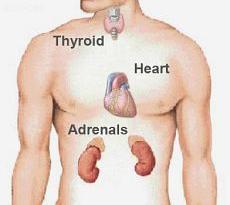
Tin is associated with iodine the same way as calcium is associated with magnesium, with tin supporting the Adrenals, and iodine supporting the Thyroid. Both, adrenals and the thyroid affect cardiac functions, so low or high levels of tin and iodine can subsequently affect cardiac functions as well, whereby tin / adrenals have some controlling effect on the left cardiac output, and iodine / thyroid have some controlling effect on the right cardiac output.
Outside of heart disease (and diseases of heart-supporting organs), left-sided cardiac insufficiency may result secondary to low adrenals, which in turn may be due to low tin (or other adrenal-supporting nutrients). Right-sided cardiac insufficiency may result secondary to low thyroid, which in turn may be due to low iodine (or other thyroid-supporting nutrients).
In addition to tin and iodine, a number of other nutritional factors either directly or indirectly affect the thyroid and adrenals, and subsequently cardiac functions, which include nickel, cobalt, zinc, potassium, manganese, iron, bismuth, lithium, most B-vitamins..., and the amino acid tyrosine, which in combination with iodine is manufactured into the thyroid hormone thyroxine (T4), while selenium affects T4 to T3 (triiodothyronine) conversion.
Fatigue and/or depression are common with Cardiac Insufficiency of either side, however symptoms of insufficiency specific to the left side are generally more often breathing difficulties or asthma, and symptoms specific to the right side are more commonly experienced as edema, particularly swelling of hands and feet.
To prevent deficiency, iodine had been routinely added to baked goods, until it was eventually replaced with bromine in the 1960s. Unfortunately, bromine competes with iodine, and by affecting its uptake by the thyroid gland results in progressive iodine deficiency, which eventually leads to hypothyroidism.
Potential symptoms with diminished thyroid functions include physical and mental fatigue, depression, mood swings, sleep disturbances, memory problems, asthma, heart palpitations, sweating, dry skin, brittle hair and nails, PMS, reduced libido, menstrual problems, post-nasal drip and frequent sinus infections, cold hands and feet, constipation, ADHD, flatulence, obesity, fluid retention, plus greater risk for fibrocystic breast disease, and in addition to thyroid cancer, various estrogen-positive cancers (breast, uterine, ovarian, prostate...).
In Canada and the US, Iodine Deficiency has not been "officially" recognized since the introduction of iodized table salt, however for various reasons - one of them being that some people just don't use any table salt - a large percentage of the population benefits from supplementing iodine in addition to whatever amounts they get from dietary sources. In fact, most individuals who are routinely put on medications for hypothyroid conditions could normalize their thyroid by simply supplementing extra iodine (and/or perhaps L-tyrosine), instead of taking thyroid medications.
Vitamin B6 can be helpful for hypothyroidism when triggered by abnormal liver functions (which may be due to high estrogen, or long-term use of drugs such as Tylenol, lithium, alcohol, etc.), however the body seems to eventually adapt to whatever amounts are supplemented, so in order to maintain normal thyroid activity with Vitamin B6, ever-increasing amounts would have to be taken. This of course becomes self-limiting, since magnesium levels (raised by Vitamin B6 intake), and Vitamin B6 itself would become unreasonably high in the long run, and there is a potential risk of Vitamin B6 overdose-related toxic effects.
Ideally, thyroid and iodine levels should be measured, so the most appropriate therapy is implemented, and any hyperthyroid conditions are caught in time as well, which could otherwise lead to bone density, or heart problems. Since iodine levels, along with a host of other interactive trace elements such as fluoride, tin, nickel, cobalt, and many others are assessed at every patient consultation, Dr. Ronald Roth had monitored hundreds of individuals who have been ingesting as much as 5mg - 6mg of organically bound iodine (40x the RDA / RDI) for many years, without experiencing any ill effects, so toxicity - for most people - is not an issue, however out of thousands of other patients Dr. Ronald Roth had tested, the great majority required 1mg or less of iodine per day to maintain normal to optimal levels. Some practitioners recommend a standard adult dose of 12.5mg of iodine daily, including for those suffering from Hashimoto’s thyroiditis, or Graves disease (Hyperthyroidism). It makes more sense though to adjust iodine levels to actual patient requirements - rather than using a standard trial and error dose since too much iodine can not only lead to Hyperthyroidism, but also Hypothyroidism (including goiter) in rare cases due to diminishing iodine uptake (binding) by the thyroid, following ongoing iodine overdose. This also applies during pregnancy, where too much - just like too little iodine - can adversely affect the baby. Supplementing normal (RDA / RDI) amounts of iodine following long-standing iodine deficiency can trigger hyperthyroidism in rare instances. At the same time, a high intake of goitrogenic / cruciferous vegetables may equally require a higher intake of iodine:
Goiter may not only develop following long-standing, inadequate iodine intake,[1] but also after consuming large amounts of goitrogenic food sources that interfere with iodine uptake and/or thyroid metabolism. These foods, also known as "goitrogens," include Brussels sprouts, sweet potatoes, lima beans, cauliflower, rutabaga, broccoli, cabbage, cassava, and nitrate-rich food sources. In some parts of the world, there are still cases emerging where children, as a result of ingesting large amounts of goitrogenic foods, end up with mental retardation, which could have been prevented with iodine supplementation. On a similar note, regular consumption of soy products - because of their phytoestrogenic properties - can also have a significant (depressing) impact on thyroid functions.
With Fibrocystic Breast Disease, sufficient iodine intake is an important consideration, as are adequate amounts of Vitamin E and essential fatty acids (EFAs), however, caffeine sources such as tea, coffee, cola drinks, cocoa / chocolate... should be avoided, or eliminated entirely.
For mild hyperthyroidism, PABA is usually helpful, and raising magnesium (if low) will at times help normalize a slightly overactive thyroid as well. Some premenopausal or postmenopausal women will, as a result of declining estrogen levels, become hyperthyroid. Most of these cases readily improve with estrogen therapy (i.e. estriol, phytoestrogens), or with supplementing manganese and/or PABA, both of which have estrogenic properties. Although it is not an essential trace mineral, bromine is a fairly potent thyroid and iodine antagonist [2] that works well in humans and animals, and is indicated for more severe cases of hyperthyroidism.
Kelp - or other types of seaweed - are sometimes recommended as a source of iodine, however kelp also contains varying amounts of bromine, so its iodine / bromine ratio will ultimately determine whether it will have a beneficial or adverse effect on someone's thyroid. Some people develop an acne-like skin condition as a result of consuming iodine-containing foods, with the culprit being frequently bromine (which is usually present as well), but rarely iodine.
See Acu-Cell "Tin - Health Effects" for details and research results about the Trace Element Tin.
Using Potassium Iodide tablets to protect from Nuclear Fallout
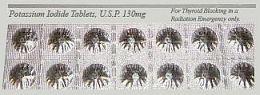
In the event of a radioactive material fallout following a nuclear disaster at a power plant, or a terrorist attack, potassium iodide can to some extent protect the thyroid gland from developing cancer following exposure to the radioactive isotopes of iodine (Iodine 131, or radioiodine), however it does not protect from other radioactive material, such as contamination with plutonium, americium, or curium which can occur through inhalation, ingestion, or contact with open wounds as a result of industrial accidents, or from terrorist attacks using "dirty bombs." To increase the rate of elimination of these contaminants, the FDA (US) has approved the two drugs pentetate calcium trisodium (Ca-DTPA), and pentetate zinc trisodium (Zn-DTPA) via injection.
Normally, the thyroid gets the iodine necessary to produce thyroxine from dietary sources such as seaweed, seafood, shellfish, iodized salt, and some seeds and dairy, however after a nuclear fallout, large amounts of of radioactive iodine become available for uptake, with the thyroid being unable to distinguish between radioactive, and non-radioactive iodine. As a result, the thyroid will absorb and retain excessive amounts of radioiodine, with those suffering from hypothyroidism, or children, being adversely affected the most.
Fortunately, if enough potassium iodide (KI) or potassium Iodate (KIO3) are taken orally from 30 minutes (a couple of hours according to some sources), to a day before being exposed to radioactive iodine, then the thyroid is saturated enough to prevent radioactive iodine from being absorbed, and thus prevents the ensuing damage to the thyroid gland which would otherwise result.
The small amount (about 1%) of radioactive iodine that may still be absorbed is eliminated by the kidneys. The standard 130 mg potassium iodide tablets that are used for thyroid protection contain about 77% iodine, which is nearly 1000x the Recommended Dietary Intake, or Dietary Reference Intake of iodine.
Please note: Dietary sources of iodine do not provide sufficient iodine to saturate the thyroid enough to prevent radioactive iodine absorption. For instance, a teaspoon of iodized salt provides approximately 6 g of salt, which contains only about 520 mcg (micrograms) of potassium iodide, so a 130 mg (milligram) tablet of potassium iodide provides 250x more potassium iodide, while the use of sea salt would require 30x the amount of iodized salt, which would make potassium iodide tablets 7500x stronger than sea salt. The same applies to other dietary sources of iodine such as kelp, or seafood, where enormous amounts would have to be consumed to (theoretically only) achieve a thyroid-protective effect.
It should also be mentioned that elemental (free) iodine, or tincture of iodine (which can be poisonous) is not effective as a blocking agent to prevent thyroid damage, although there are claims that stronger solutions of topical applications would work, which however has not been officially verified.
Additional FDA Patient Information
Use of 130 mg Potassium Iodide USP tablets for thyroid blocking:
Take potassium iodide tablets only when Public Health officials tell you. In a Radiation Emergency, radioactive iodine could be released into the air. Potassium iodide (a form of iodine) can help protect you. If you are told to take this drug, take it one time every 24 hours. Do not take it more often. More will not help you and may increase the risk of side effects. You will likely be told not to take the drug for more than 10 days.
Warning:
Do not take Potassium Iodide if you know you are allergic to Iodine (see side effects below). Keep out of the reach of children. In case of overdose or allergic reaction, contact a physician or public health authority.
Indications:
Thyroid blocking in a radiation emergency only.
Dose (U.S.):
Adults and children one year of age or older: One 130 mg tablet once a day. Crush for small children. Babies under one year of age: One-half 130 mg tablet once a day. Crush first.
Dose (World Health Organisation):
Adults:
One 130 mg tablet once a day
Children age 3-18:
One-half 130 mg tablet once a day (65 mg)*
Children under 3 years old:
One-quarter 130 mg tablet once a day (32 mg)
Babies under 1 month old:
One-eighth 130 mg tablet once a day (16 mg)
* heavier / larger teens should use 130 mg (adult-size) tablets.
Take for 10 days unless directed otherwise by state or local public health authorities. Store at controlled room temperature between 15 to 30C (59 to 86 degrees F). Keep bottle tightly closed and protect from light.
You may take potassium iodide even if you are taking medicines for a thyroid problem (for example, a thyroid hormone or anti-thyroid drug). Pregnant and nursing women and babies and children may also take this drug.
Side effects:
Usually, side effects of potassium iodide happen when people take higher doses for a long time. You should be careful not to take more than the recommended dose or take it for longer than you are told. Side effects are unlikely because of the low dose and the short time you will be taking the drug. Possible side effects include skin rashes, swelling of the salivary glands, and "iodism" (metallic taste, burning mouth and throat, sore teeth and gums, symptoms of a head cold, and sometimes stomach upset and diarrhea).
A few people have an allergic reaction with more serious symptoms. These could be fever, joint pains, or swelling of parts of the face and body, and at times severe shortness of breath requiring immediate medical attention. Taking potassium iodide may rarely cause overactivity of the thyroid gland, underactivity of the thyroid gland, or enlargement of the thyroid gland (goiter).
What to do if side effects occur:
If the side effects are severe or if you have an allergic reaction, stop taking potassium iodide. Then, if possible, call a doctor or public health authority for instructions.
Tin: no DRI, RDA, EAR or Tolerable Upper Intake Level has been established by the WHO, the Institute of Medicine or EFSA, because no reproducible human deficiency syndrome has been demonstrated in humans. The suggested intake figures for tin in the table below are theoretical - they are not reference values derived from a deficiency endpoint.
The Therapeutic Range shown is a record of doses reported in the literature rather than a recommended intake - see the note below the table. For context, controlled human balance studies show that tin intakes of roughly 36 - 50 mg per day increase faecal zinc excretion and reduce net zinc retention. See the evidence review below.
The iodine figures are established DRI / RDA values and are unaffected by this notice.
Tin - (No DRI / RDA established - theoretical)
Iodine
Tin - (No DRI / RDA established - theoretical)
AGE
0-6 months
6-12 months
1-10 years
11-18 years male
19+ years male
11-18 years fem.
19+ years fem.
-------------------
ULTherapeutic Range
Theoretical suggestions only. No DRI, RDA or Upper Intake Level exists for tin - see the notice above the table.
Iodine
AGE
0-6 months
6-12 months
1-10 years
11-18 years male
19+ years male
11-18 years fem.
19-50 years fem.
50 + years fem.
pregnant
lactating
-------------------
ULTherapeutic Range
DRI (RDA)
110 mcg AI
130 mcg AI
90 - 120 mcg

120 - 150 mcg
150 mcg

120 - 150 mcg
150 mcg
150 mcg

220 mcg
290 mcg

200 mcg - 1.1 mg
250 mcg - 130 mg +
Best time to take Tin: Not relevant as there are no supplements available.
Best time to take Iodine: Early in the day, with caffeine-free beverages (water, juice, rice milk...). Reduce / discontinue if palpitations are experienced.
Cellular / Intracellular Attributes and Interactions:
Tin Synergists: Nickel, iodine, Vitamin B1, Vitamin C.
Iodine Synergists: Cobalt (low/normal amounts), tin, Vit B12, Vit B6*.
Tin Antagonists / Inhibitors: Iron, calcium, copper, chloride, Vitamin B2, Vitamin E, Bismuth*, Zinc*.
Low Tin: No reproducible human deficiency syndrome has been established, and no tin-dependent enzyme has been identified. Symptoms historically attributed to low tin - fatigue, depression, shortness of breath, asthma, headaches, insomnia - were not confirmed against controlled evidence.
In animals: Low tin results in poor growth, alopecia / bilateral hair loss, hearing loss and reduced feeding efficiency.
Low Iodine: Fatigue, depression, low cardiac output, goiter, edema (water retention), hair loss, inability to think, memory loss, hypothyroid, weight gain, low body temperature, miscarriage, infertility, fibromyalgia, shortness of breath, asthma, psychiatric disorders, fibrocystic breast disease, menstrual problems, dry skin, watery eyes, hoarse voice, (cancerous) tumors.
Children: mental retardation, delayed sexual development, depressed growth, deafness.
During pregnancy: Potential hypothyroidism, thyroid enlargement, or cretinism in infant.
Tin Sources: Tinned / canned foods, cereal grains, dairy, meat, vegetables, seaweed, Brewer's yeast, licorice, some toothpastes.
Iodine Sources: Seafood, shellfish, fish liver oils, seaweed, sunflower seeds, iodized table salt
Table key
DRI
Dietary Reference Intake
RDA
Recommended Dietary Allowance
AI
Adequate Intake
UL
Tolerable Upper Intake Level
Therapeutic Range
Doses reported in clinical or therapeutic use in the published literature. These are a
record of doses that have been administered, in many cases as medication rather than as
a nutrient, and they may exceed the UL. They are not intakes recommended by this site.
Evidence Review
Critical Scientific Evaluation of Tin and Iodine in Thyroid and Adrenal Physiology
A Comparative Review of Historical Alternative Claims and Contemporary Biomedical Evidence
AI-assisted literature review ·
30 peer-reviewed sources ·
The article above is preserved as first published and has not been altered. What follows
is a separate document that examines its claims against the current biomedical
literature, reproduced here in full. The first section addresses the paired
tin–iodine model shared with the companion
Tin article; the sections after it address iodine specifically.
The Paired Tin–Iodine Model
Both the tin and the tin/iodine articles on this site rest on a shared organising idea. Tin is
described as supporting the adrenal glands and iodine as supporting the thyroid gland, the two
elements are said to pair with one another in the way calcium pairs with magnesium, and the
pairing is then mapped onto the heart: tin and the adrenals are held to govern
left-sided cardiac output, iodine and the thyroid right-sided cardiac output.
From that mapping the articles derive a diagnostic rule — breathing difficulty and asthma
point to the left side and therefore to tin, while swelling of the hands and feet points to the
right side and therefore to iodine.
Because this framework is asserted on both pages, it is examined once here, and the review that
follows on each page addresses only the claims specific to that element.
Where the Model Is Correct
The symptom mapping itself restates conventional cardiology accurately. Left-sided and
right-sided cardiac failure do present differently, and the distinction is a standard part of
clinical assessment[A1]. Left-sided failure produces pulmonary
congestion, and therefore breathlessness, orthopnoea, tachypnoea, crackles on auscultation and
pleural effusion[A1]. Right-sided failure produces systemic venous
congestion, and therefore peripheral oedema, raised jugular venous pressure, hepatomegaly,
ascites and right hypochondrial pain[A2].
A practitioner who noticed that swelling of the hands and feet clustered with one presentation
and breathlessness with another was observing something real. The laterality of the symptoms is
not the error in this model.
Where the Model Fails
Laterality Is a Property of the Failing Chamber, Not of a Nutrient
The reason left-sided and right-sided failure differ is anatomical. The left ventricle discharges
into the systemic circulation and receives from the pulmonary veins, so when it fails, pressure
backs up into the lungs. The right ventricle receives from the systemic veins, so when it fails,
pressure backs up into the periphery[A1]. The side of the heart
determines which vascular bed becomes congested.
An ingested trace element is distributed by the systemic circulation and reaches both ventricles
through the same coronary supply. No transport mechanism has been described that would deliver
tin preferentially to the left heart or iodine preferentially to the right, and no such
lateralised elemental regulation appears anywhere in cardiovascular physiology. The model takes a
real anatomical asymmetry and attributes it to a nutritional cause that cannot produce it.
The Thyroid Affects the Heart, but Globally
The thyroid half of the pairing has a genuine physiological basis that the model then
misstates. Triiodothyronine is a significant regulator of cardiac function: it induces
transcription of α-myosin heavy chain and sarcoplasmic reticulum calcium ATPase, and it
relaxes vascular smooth muscle[A3]. In hyperthyroidism contractility
and cardiac output rise while systemic vascular resistance falls; in hypothyroidism the reverse
occurs[A3]. Hypothyroidism is accordingly associated with reduced
cardiac output, impaired diastolic function and raised systemic vascular
resistance[A4].
These are whole-organ effects. Thyroid hormone acts on both ventricles and on the systemic
vasculature at once. It has no right-sided specificity, and the literature describing its cardiac
action does not divide that action between the chambers.
“Low Adrenals” Is Not a Diagnosable State
The adrenal half of the pairing has no comparable basis. The condition the articles describe
— sub-clinical adrenal underfunction presenting as fatigue, depression and reduced cardiac
output, correctable by trace minerals — corresponds to what is generally termed adrenal
fatigue. A systematic review of the available studies concluded that there is no substantiation
that adrenal fatigue exists as a medical condition[A5].
Adrenal insufficiency as recognised clinically is a distinct and uncommon disorder, whether
primary (Addison's disease) or secondary, and is established by cortisol and ACTH measurement
rather than inferred from symptom laterality. Cortisol synthesis is driven by ACTH acting through
the melanocortin 2 receptor and the cAMP/protein kinase A pathway, mobilising cholesterol via
StAR to the cytochrome P450 side-chain cleavage enzyme at the inner mitochondrial
membrane[A6][A7]. No step in that
cascade requires tin, and no tin-dependent enzyme has been identified anywhere in adrenal
steroidogenesis.
The Calcium–Magnesium Analogy Does Not Transfer
Calcium and magnesium are paired in the articles as the template for the tin–iodine
relationship, and that pairing reflects a documented physiological antagonism. No equivalent
interaction between tin and iodine has been demonstrated in humans. The one trace-element
interaction repeatedly documented for tin in controlled human balance studies is with
zinc, not iodine, and it is an antagonism rather than a synergy: elevated dietary tin
increases faecal zinc excretion and reduces net zinc
retention[A8][A9]. The pairing the
model proposes is therefore not merely unproven; the element tin does have a documented partner
in human metabolism, and it is a different one.
The paired model compared with cardiovascular and endocrine consensus
Element of the model
As presented in the articles
Peer-reviewed consensus
Sources
Symptom laterality
Breathlessness indicates the left side; swelling of hands and feet indicates the right.
Correct as stated. Left-sided failure congests the lungs; right-sided failure congests the systemic veins.
The paired tin–iodine model combines an accurate clinical observation with an
unsupportable causal explanation. Cardiac failure genuinely does present differently on the two
sides, and the thyroid genuinely does influence cardiac performance. What does not follow is that
two trace elements divide the heart between them, that symptom laterality can be read backwards
to a specific mineral deficiency, or that adrenal function can be titrated with tin. The
predictive value the framework appeared to have came from the cardiology it restated, not from
the elemental scheme laid over it.
Iodine Supplementation as a Substitute for Thyroid Medication
The most consequential clinical assertion in the article above is that
“most individuals who are routinely put on medications for hypothyroid conditions could
normalize their thyroid by simply supplementing extra iodine (and/or perhaps L-tyrosine),
instead of taking thyroid medications”. This
statement inverts the relationship established in the literature for the population it
addresses.
Iodine deficiency is unambiguously a cause of goitre and impaired thyroid hormone production,
and severe deficiency during development causes irreversible neurological
harm[9][23]. Where deficiency is
the operative cause, correcting iodine intake is the appropriate intervention. In Canada and the
United States, however, the population is broadly iodine-replete, and the predominant cause of
hypothyroidism in iodine-sufficient regions is autoimmune thyroiditis rather than dietary
shortfall.
In that setting additional iodine is not a substitute for hormone replacement, and can worsen
the underlying disorder. When patients with Hashimoto's thyroiditis living in an area of mild
iodine deficiency were given small supplementary doses of iodine, seven developed subclinical
hypothyroidism and one became overtly hypothyroid[3].
Iodine-induced hypothyroidism is a recognised clinical entity in its own
right[4], arising when the thyroid fails to escape the acute
Wolff–Chaikoff effect through downregulation of the sodium/iodide
symporter[8]. Failure to escape is specifically more likely in
euthyroid patients with autoimmune thyroiditis, in newborns and fetuses, and in patients
previously treated for Graves' disease[6].
High iodine intakes are tolerated by most healthy individuals, but in susceptible people they
may precipitate hyperthyroidism, hypothyroidism, goitre or thyroid
autoimmunity[5][7]. Once
hypothyroidism is established, thyroid hormone replacement remains the standard of care. A
reader who discontinued prescribed medication on the strength of the sentence quoted above
would be acting against the weight of the evidence, and in the commonest form of the disease
would risk aggravating it.
Bromine, the Thyroid, and the Treatment of Hyperthyroidism
The article makes two distinct claims about bromine, which differ sharply in how well they are
supported.
Competition with Iodine
The first claim — that bromine competes with iodine and impairs its uptake by the thyroid
— is mechanistically plausible and directionally consistent with what is known about the
sodium/iodide symporter (NIS), the transporter responsible for concentrating iodide in thyroid
follicular cells. NIS is subject to competitive inhibition by other anions; perchlorate and
thiocyanate are the best-characterised examples, and inhibition reduces iodide uptake and
consequently thyroid hormone synthesis[13]. Fluoride has been
investigated on the same basis[14]. The general principle the
article invokes is therefore sound, though the direct human evidence that dietary bromide
exposure produces clinical hypothyroidism by this route is thinner than the article's phrasing
implies.
Bromine as a Therapy
The second claim — that bromine “works well in humans and animals, and is indicated
for more severe cases of hyperthyroidism” — is not supported, and the direction of
the evidence runs the other way. Bromide has no place in contemporary management of
hyperthyroidism, and the reference cited beside that sentence in the original article concerns
iodine toxicity rather than bromide therapy.
What the literature does document is bromism, the syndrome of chronic bromide intoxication.
It presents with neurological features including ataxia, dysarthria and gait disturbance,
psychiatric features including confusion, hallucinations and delusions, and dermatological
features (bromoderma), and it is difficult to recognise because it mimics a range of primary
psychiatric and dermatological
disorders[10][11]. Therapeutic
bromide use has largely disappeared from medicine, but contemporary cases continue to arise
from unregulated dietary supplements[12] — which is
precisely the route a reader acting on this passage would take.
PABA and Magnesium for Hyperthyroidism
The article states that “for mild hyperthyroidism, PABA is usually helpful” and that
raising magnesium may help normalise a slightly overactive thyroid.
The premise underlying the PABA recommendation is not invented. Para-aminobenzoic acid was
investigated in the mid-twentieth century and does exert an antithyroid
action[15]. What the article omits is the finding reported
alongside it in the same literature: PABA administration was associated with adrenal atrophy as
well as thyroid inhibition[16]. An agent that suppresses thyroid
function through an unclarified mechanism, with documented adrenal toxicity and no modern
clinical development, is not a benign nutritional option, and it is notable that the article
recommends it on a page whose central theme is the support of adrenal function. No adequate
human clinical evidence was identified for treating hyperthyroidism with magnesium.
Goitrogens and Soy
The article's treatment of goitrogenic foods is broadly consistent with the literature: goitre
can follow both long-standing inadequate iodine intake and high consumption of foods that
interfere with iodine uptake or thyroid
metabolism[9][23].
The statement that regular consumption of soy products “can also have a significant
(depressing) impact on thyroid functions” overstates the evidence. A systematic review and
meta-analysis found that soy supplementation has no effect on thyroid hormones and raises TSH
only very modestly[17]. A review of the relevant literature
concluded that there is little evidence that soy foods or isoflavones adversely affect thyroid
function in euthyroid, iodine-replete individuals[18], and
isoflavone supplements did not affect thyroid function in iodine-replete postmenopausal
women[20]. The antithyroid activity of isoflavones observed
experimentally requires additional factors, iodine deficiency in
particular[19]. The practical caveat that does survive is
different from the one the article gives: soy may inhibit the absorption of thyroid hormone and
so raise the dose required by patients already taking
it[18]. The article's own emphasis on adequate iodine intake is
the correct mitigation.
Fibrocystic Breast Disease
This is the claim in the article that the literature supports most directly. Clinical studies of
iodine replacement in fibrocystic disease of the breast reported clinical improvement in
74 % of patients in a crossover series and, in a double-blind study, subjective and
objective improvement in 65 % of the treatment group against a 33 % subjective placebo
response[21]. A randomised, double-blind, placebo-controlled
multicentre trial subsequently examined molecular iodine at 1.5, 3.0 and 6.0 mg/day over
six months in 111 euthyroid women with documented breast pain and
fibrosis[22].
Two qualifications apply. The benefit in these studies attaches specifically to
molecular iodine, which was reported as non-thyrotropic and the most beneficial of the
forms tested, rather than to iodide salts
generally[21]. And the accompanying recommendation to eliminate
caffeine is not supported by these trials, which did not test it.
Where the Article Is Consistent with the Evidence
Several positions taken in the article are well founded and are not corrected here:
That excess iodine can cause both hyperthyroidism and hypothyroidism, including
goitre, is accurate and is a central finding of the excess-iodine
literature[5][6].
That supplementing ordinary reference-intake amounts of iodine after long-standing
deficiency can trigger hyperthyroidism in rare instances is
correct[7].
The argument against applying a blanket 12.5 mg adult dose, including to patients with
Hashimoto's thyroiditis or Graves' disease, is consistent with the evidence on iodine excess
and is the more defensible position in that
passage[5][6].
That potassium iodide may rarely cause overactivity, underactivity or enlargement of the
thyroid gland is accurate[7].
The section on potassium iodide for thyroid blocking in a radiation emergency reproduces
published FDA and World Health Organization guidance and requires no correction.
The claim that a large percentage of the North American population benefits from supplementing
iodine is partially supported: iodine deficiency does persist in populations that avoid iodised
salt, and supplementation measurably affects thyroid function
parameters[9][23]. What does not
follow is the inference drawn from it about replacing prescribed medication.
The Suggested Intake Figures for Tin
No Recommended Dietary Allowance, Estimated Average Requirement or Tolerable Upper Intake Level
has been established for tin by any international authority, because no reproducible human
deficiency syndrome has been demonstrated. Any figure presented for tin intake is therefore a
suggestion rather than a reference value derived from a deficiency endpoint, and the reference
table on this page has been annotated accordingly.
The “Therapeutic Range” row in that table should be read as what it is: a record of
doses reported in clinical or therapeutic use in the published literature, in many cases as
medication rather than as a nutrient, and not an intake this site recommends. It is listed below
the Tolerable Upper Intake Level precisely because such doses commonly exceed it. For context on
the tin figures, controlled human balance studies show that intakes in the region of 36 to
50 mg/day measurably increase faecal zinc excretion and reduce net zinc retention, an
interaction examined in detail in the evidence review accompanying the companion tin article.
Editor's Assessment
A real deficiency, over-generalised
An editorial reading of the original article and the evidence review above
Assesses both preceding sections ·
Numbered references point to the reference list for this article.
As with the companion article on tin, the useful distinction here is between an
empirical observation (patients improving on iodine) and the
causal rule derived from it (that iodine can therefore replace thyroid
medication).
The iodine article differs from the tin article in one important respect: its central subject is
a genuine nutrient with a genuine deficiency disease. That makes its accurate passages more
accurate — and its overreach harder to spot.
1 A Real Deficiency Generalised into a Universal Cause
Iodine deficiency genuinely causes goitre, impaired hormone production and, in development,
irreversible harm. Patients whose thyroid symptoms stemmed from insufficient intake would
have improved on iodine, visibly and repeatably.
The Biological Reality
In iodine-replete populations such as Canada and the United States, the dominant cause
of hypothyroidism is autoimmune thyroiditis, not dietary shortfall. The two conditions
present similarly but respond to opposite interventions[3][4].
The Misinterpretation
A rule that held for the deficient subgroup was extended to everyone on thyroid
medication. In the largest patient group it is not merely ineffective; supplementary
iodine can push autoimmune thyroiditis further toward hypothyroidism.
2 Reading an Antagonist as a Therapy
Both bromine and PABA appear in the article as treatments for an overactive thyroid, and in
both cases the underlying pharmacological observation is correct: each does suppress thyroid
activity.
The Biological Reality
Suppressing a gland with a toxic agent is not the same as restoring it to normal
function. Bromide accumulates and produces bromism, a neurological and psychiatric
syndrome[10]. PABA's antithyroid action was reported together with adrenal atrophy[16].
The Misinterpretation
Because the thyroid marker moved in the desired direction, the agent was classified as
helpful. The toxicity that accompanies the effect, documented in the same literature
that establishes the effect, did not enter the assessment.
3 The Measurement Assumed What It Was Meant to Show
The article states that iodine levels, along with fluoride, tin, nickel, cobalt and other
trace elements, were assessed at every patient consultation, and draws population-level
conclusions from those readings.
The Biological Reality
The assessment method that produced these readings is the one examined on the companion
tin page, where commercial hair mineral analysis was found to return materially
different results for split samples from a single donor, within and between
laboratories.
The Misinterpretation
A method that cannot reliably rank one patient against another was used to conclude that
a large percentage of the population needed supplementation. The finding is a property
of the reference ranges, not of the patients.
4 Absence of Complaints Read as Evidence of Safety
Hundreds of individuals are reported to have taken 5–6 mg of iodine daily for
years without ill effects, and toxicity is concluded not to be an issue for most people.
The Biological Reality
High iodine intakes are indeed tolerated by most healthy individuals. The documented
harms fall on identifiable susceptible subgroups — those with autoimmune
thyroiditis, prior Graves' disease, newborns and fetuses — and occur at rates a
single clinic's case series is not designed to detect[6][7].
The Misinterpretation
An uncontrolled series without systematic follow-up was treated as a safety study. The
article itself concedes the point a few sentences later, noting that too much iodine can
cause both hyperthyroidism and hypothyroidism — a tension it does not resolve.
Summary
This article is at its most reliable where it stays close to iodine deficiency and its
consequences, and where it argues for individual assessment against blanket high-dose
protocols — positions the evidence supports. It becomes hazardous at exactly one
point: where a correct observation about deficient patients is converted into a rule for
patients who are not deficient, and offered as grounds for stopping prescribed treatment.
The observations were real. The generalisation drawn from them was not warranted.
The information is provided for educational purposes only and is not intended for self-treatment — full disclaimer
General recommendations for nutritional supplementation: To avoid stomach problems and improve tolerance, supplements should be taken earlier, or in the middle of a larger meal. When taken on an empty stomach or after a meal, there is a greater risk of some tablets causing irritation, or eventually erosion of the esophageal sphincter, resulting in Gastroesophageal Reflux Disease (GERD). It is also advisable not to lie down right after taking pills. When taking a large daily amount of a single nutrient, it is better to split it up into smaller doses to not interfere with the absorption of other nutrients in food, or nutrients supplemented at lower amounts.